.
The Spanking Gene
Or
The Autistic and the Blade Three
Chapter One
Journey into a Lost World: The Beginnings of Civilization
“The Paleolithic”
Eisler shows us the Paleolithic and Neolithic world, with dates, making the case that for a long time there is no evidence of the life of conflict we have come to think of as the original state of affairs. They speak of life and life giving – and I spend most of this entry trying to make the case that all that means evolution, aboriginal, forever knowledge of evolution, that this knowledge is the crucial thing that was lost when the disasters happened and everything changed.
Beginning in the Paleolithic, it talks about burials with female symbols, cowrie shells, shaped like vulvas, is that it? and says that symbols of life and birth in a burial are indicative of resurrection thinking, birth from death and they also talk about fertility rites for wild things, plants and animals, and this is the interconnectedness of the life first approach of the partnership model, that the live-giving powers of the goddess extends to all things.
This paragraph about the paleolithic ideological environment, the Goddess religion:
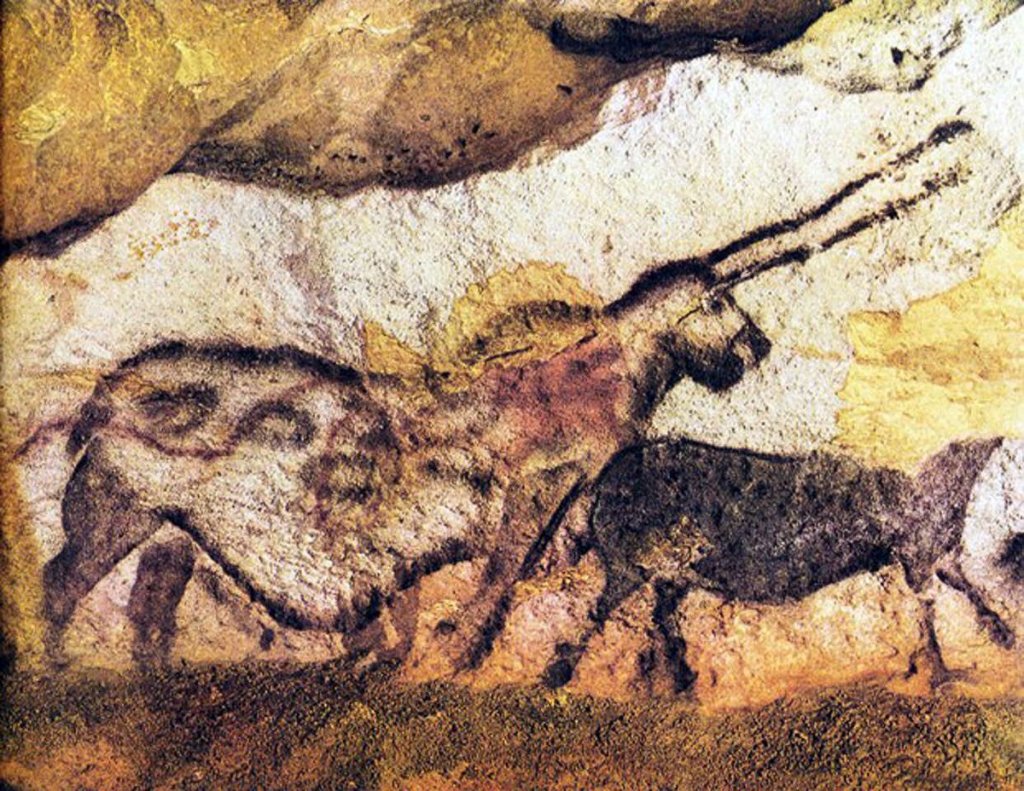
“These cave sanctuaries, figurines, burials, and rites all seem to have been related to a belief that the same source from which human life springs is also the source of all vegetable and animal life – the Great Mother Goddess and Giver of All we still find in later periods of western civilization. They also suggest that our early ancestors recognized that we and our natural environment are integrally linked parts of the great mystery of life and death and that all nature must therefore be treated with respect.”
Much of the Goddess imagery has her surrounded with plants and animals and sometimes she has animal features. Today still, many Indigenous societies share this orientation, and it’s all good.
Life giving, birth death, resurrection, all good.
I just think there’s more. There is more about the today people, it’s not just a religious awe or respect about nature, I mean that’s what we WEIRDs, we modern European sorts notice, that’s the glaring difference, the respect, the treatment of other living things and we think of that as a moral matter, but this respect is founded in deep knowledge, in understanding how it works, environments, it is real knowledge, not morality or religion. “Seven generations,” is real, practical knowledge, not religion.
Evolution, in a word.
I mean, we know about birth and life and death today still, but we lost something, didn’t we.
All the talk about “life giving,” ought to somehow be about evolution, about life’s mechanisms, not the power of reproduction but the power of evolution is the opposite of the Dominator and their blade. Again, today’s Dominators know about birth – what people don’t know is evolution, it’s a bloody debate these days, even as an origin story, let alone as working on us all every minute. Life and death seem equal and opposite in a snapshot maybe, but . . . but what, one lives and moves and one just lies there.
I see I’m having some trouble making the case that humans always used to understand evolution, I know it’s a “new discovery,” to the “western mind,” or something but I’ll tell you a secret, of genetics and Neurotype: it always will be a debatable new discovery to the Dominator mind, a novelty, I think.
That department in the modern brain is labelled, “Creation Stories,” I think, and this is a configuration created by the Spanking Gene, somehow it all works together, spanking is reasonable if you are a product created by something or someone and not a spontaneous entity of self creation. Some modification of you is necessary and acceptable before you go to market if you are a created product with limitations and flaws – never mind, I’m in the ether.
It is impossible to speak about how other genes think, of course I’m guessing, but they all surely close their own circles this way. We don’t have to prove to ourselves what is already in our brains, nor can we, that’s the problem. You get something in there, it’s like provenance, it’s its own proof. I simply offer another sort of mind’s best attempt, for comparison.
I mean, it’s clear in reverse, that when you believe some creation story, you will lose any chance of grokking evolution because your data is gone, proscribed – but that still doesn’t prove our Goddess worshipping predecessors had the chance and took it, even if they didn’t have their own fictional creation myths, does it?
I may have to settle for “they MUST HAVE,” arguments, like since they didn’t spin out of control into environmental disaster or war in the Neolithic, they must have known something, like the Seven Generations meme – ah, but they farmed and kept animals, didn’t they? It’s hard to farm and breed livestock without learning the basics of genetics and even evolution – unless you have some creation story stuck in your craw that you’re not allowed to think around?
That would seem to make sense!
I mean, how is the miracle of birth a developmental thing for humans, birth predates humanity by a very long time. Humans did not discover sex and reproduction and no such discovery counts as any part of our mental history, does it? – but knowing evolution or not sure seems to be. Inventing creation stories and forgetting about how life operates is absolutely part of the story.
Of course it is going to be my position that it is not that the disaster was a turning away from life, and the patriarchy as we see likes to outlaw birth control, they “love life,” as such, the protection of life is their entire excuse, their entire reason to be, they are not going to admit to “turning away from life,” but rather it seems to me that they turned away from evolution (and started saying stuff like, “I hit them, but it doesn’t hut them,” which means “they have a created permanent Nature, their environment doesn’t affect them,”). Not away from life, just away from . . . understanding life, I guess?
From the simple causality of evolution, which means from the accountability of reality, of the future.
Ouch.
Central to my thinking, though. That the humans around me don’t worry about the evolution they cause has been a blinding light in my eyes all my life. This is what the Davids called actuarial knowledge, that what we do to one another causes how we evolve, the environment we create in life directs people’s evolving. My words.
I think they said, “the knowledge of what sort of a society we create,” staying in sociology or anthropology, history mode, and not straying into evolution about it as I . . . must.
Because the thing is, everything is smaller than Allistics think. They go straight to “the miracle of birth,” – which exists for everything that lives pretty much – for some question they’re only asking about people and speak as if they discovered it.
This again:
“These cave sanctuaries, figurines, burials, and rites all seem to have been related to a belief that the same source from which human life springs is also the source of all vegetable and animal life” – italics mine – and that belief could well be describing evolution, could it not? The Tree of Life? The first noun could be changed, from “source,” to something like method or principle, but it would be the same sentence.
I suspect that the magic “power of life,” really means or at least includes the magic transformative power of evolution. To me, that’s the magic, sex and birth is only creation, only reproduction, not magic – the magic is the little bit of actual change you get with evolution. New things, that’s magic, that’s creative. If the female symbols lead us to magic, the magic of life, to me, that’s evolution.
(Here’s my optional section. Shades of Dune, if the priestesses were evolution conscious, were they selective, trying to arrange bloodlines? Hmmm. If humanity were evolution conscious, did we exercise some sort of control and might Eisler’s (Gimbutas’) disaster be a rebellion of the unwanted traits or something?
It feels like a sort of a psychological truth, everything about the warrior society seems like a childish rebellion against the truth of evolution to me, the idea of a deterrent is the opposite of the idea of the environments shaping us, with a deterrent, we are supposed to adapt in reverse or something. We have had every opportunity to realize that environments shape us, two hundred years, but no, screw you, Darwin, we’re going with “deterrents.”)
Ha – Eisler contrasts this older society, conscious of life and the interconnectedness of nature with the view of the modern men who looked back and saw only men as active and causative, and basically only hunting as what life was all about, and I’ll say it about hunting, same as birth, although I don’t have to tell Eisler, this is for the boys – hunting also is not part of the story of humanity, humans didn’t invent hunting either. Somehow they look back a little way, to only our immediately previous situation, and treat that like the bloody Beginning of Time, some ideological starting point. Sorry, ha.
Hunting. Breeding. Sexual differences, even, all of these predate the very idea of human beings and they are not our story. That’s just silly.
I mean, yes, sometime in the past, our ideology was still with the world and not against it, and that doesn’t seem to be the case anymore for most people alive today, and all that nature stuff, Goddess religion, it was all real and good of course. I’m just saying there is more to what humans are than the very most basic building blocks of life, sex and nutrition. All animals have those.
There was more to that previous life than knowing where babies come from, this knowledge is only causative of revolutions in our strange, modern, personal lives, and I have never bought people saying that we didn’t used to know, as a species. That’s just bizarre, to imagine that, they don’t think animals know what breeding is, it’s bizarre. I think it is projection to place these things as causative of anything that all animals don’t do. Again, if there is depth, secret knowledge held by the priestesses, I think it has to be evolution, at least the Seven Generations sort of thinking.
Full disclosure, at least intellectually, I’m asexual. I don’t think sex or gender have any of the power everyone since Augustine or Freud thinks it does, I think humanity has big violence problems and they spend all their time thinking and talking about sex as though our lives were the same as the bonobos, as if we weren’t also at war while we diddle one another. I’m sorry but get your science out of the gutter. There is more to life. What about sex and gender affects climate change, or war, or the plague? Can you look somewhere else, my Freudian minded friends?
But evolution, that I think has power, and that’s what maybe people sense, sex is touching evolution, it is possibly a distinction in belief without a difference again, sex has power, because it means evolution and genetics. Of course.
Sorry, back to it.
We spend a few pages talking about how the patriarchy projected its violence onto much paleolithic art and how many arrows and spears are not, they are trees and branches and plants, which if they weren’t, would be conspicuously missing in the art of people living off the land. They mention cases where they must have worked awfully hard to read it so, spears with the pointy part at the wrong end and whatnot. They say nature and animism make far more sense than hunting in most scenes, and the supposed spears and arrows, if that’s what they are, never seem to find the mark, and paleolithic art is being seen as far more holistic these days, it’s a Goddess and her world, not pornography and hunting. LOL.
All well and good. I agree with the premise, it was good and now it’s not, I just need to make sure we have evolution thoroughly embedded in it all, and I think that’s its role in this story: it was good when we understood and believed in evolution, then some disaster happened and they started talking about creation and Human Nature instead, and stopped seeing the changes they make in each other, and began exploring a technology of mistreatment, ignoring all complaints.
So they’re saying we used to live from this partnership attitude, which was aligned with female principles of life and nurturing, closer to nature than today, and I’m just trying to say those principles include an Indigenous sort of understanding of evolution, of how environments change us – that is not perhaps still automatically part of even the female side of today’s most common human profile.
I mean neurotype, and it seems to be what Eisler is getting at, it’s a mode of life for all, and to try to understand it by projecting our, today’s dominator mode people, even women back onto Palaeolithic life is sure to miss.
We are today, “life giving,” and “nurturing,” more so the women, or we think we are, but something is surely different and while we still literally give birth and feed it is nevertheless not the same, coming from a mother who thinks people were just created by some warrior god as it was from one who understood that motherhood sort of IS the Goddess, simply breathing.
Eisler saw this, I just feel it was extremely difficult to express, perhaps they hadn’t quite seen what I think I do, that this human, the dominator model is somehow blind to evolution as regards themselves. I mean, it’s a thing I say a lot, and I’ve never heard anyone else say it.
If they knew we couldn’t see it, they could see that’s what changed, maybe, but no-one sees it, even the Allistic scientists, this is the problem.
But hey – you would be, wouldn’t you? Blind to your own changes. Do you suppose as we bred pit bulls to be tougher and tougher, that the dogs noticed? Think they knew their parents and grandparents were relatively peaceful dogs?
Of course dogs don’t grow up with their families, so they couldn’t. But could they if they did? Every pit bull growing up in shame about his milquetoast father? That we do hear from ourselves, don’t we, Death of a Salesman and whatnot.
We hear it, but we hear it from the newly evolved POV, like that, Willy is weak it’s because we are now tougher, and we don’t worry what we are now, we resent what Willy was or wasn’t? We evolve because we hate the past, so we like our present better and the pit bulls probably would too, we have both been bred to like it this way, and how does a creature find objectivity and perspective, ever?
Except Neurotype, except diversity, maybe they don’t all change at once, right?
The Columbian cultural exchange caused the European enlightenment, according to the Dawn of Everything, we got a glimpse when we encountered the New World, unfortunately the Dominators have been pushing hard to bring the Turtle Islanders and the Indigenous the world over to join the model.
Neurodiversity is another chance, another glimpse.
(Back to the optional line of thought, referring to the “Dune,” bit, it bothered me for a minute like it had to be that conscious, but of course it doesn’t.
Every anthropologist has a story about how small Indigenous groups retain any egalitarianism and it’s about nipping it in the bud when some Big Man wants to start telling people what to do by force, by nudging said would be boss off a cliff. That would do it for the vector that concerns me, the Bene Gesserit (spelling, I forget, it’s Dune) wouldn’t have to do more than that, I mean they wouldn’t have to be arranging marriages.
But, psychologically, is this different? Perhaps the disaster of 5,000 years ago is still some rebellion of Big Men that failed to die, perhaps the cliffs weren’t high enough. The volcano went cold or something. Honestly, I’m not in love with it. I mean why do Big Men just pop up anyway, there’s an assumption of evil Human Nature in that idea that I’m supposed to be fighting, isn’t there.)
.
Chapter One
Journey into a Lost World: The Beginnings of Civilization
“The Neolithic”
While people were re-interpreting the symbols of the cave art in this more holistic way, in the early 1960s, others were digging out Catal Huyuk and Hacilar, Neolithic cities in modern Turkey that filled the Neolithic years for us, having been occupied for most of a millennium on either side of 5,700 BCE and seeing that the first signs of the agricultural revolution are from between 8,000 and 9,000 BCE and it was an established fact by 6,000 BCE.
The Goddess religion was continuous, from the Ice age through the Paleolithic, clear through to what we know as the Bronze Age civilizations, becoming all the goddesses we know of today.
Over and done by 6,000 BCE, the agricultural revolution – not ready to back it up yet, but I suspect these Partnership people weren’t spanking. There’s no record of jails before Athens, I don’t think, and those were debtor’s prisons, but Graeber says we’ve been in debt for the same 5,000 years Eisler says we’ve been stuck on Dominator Mode for 5,000 years, so I’m going to say we almost certainly had the debtor’s prisons at least immediately with the disaster, at 3,000 BCE and that spanking probably became an established fact in Europe and the near east then.
Eisler says the Neolithic was a long period of progress, continuous, and, “ . . . almost universally, those places where the first great breakthroughs in material and social technology were made had one feature in common: the worship of the Goddess.”
If we’re talking about Neurotype, this would smooth a trouble I’ve been having about who invented the new tech, but who seems to have invented “society,” and that while many technologies seem brilliant and not harmful by themselves and I would happily take Autistic credit for them, I don’t want to blame society, or the collapse of the modern world on Autistic invention, and certainly not on the previous world of Goddess worship. All this trouble looks like part of the new world to me, Dominator model trouble, not smart tech trouble.
With a change of Neurotype, with the drift of a gene, it can all fit, I think.
Eisler says, sometime before or in 1987, that this new knowledge of older civilizations hadn’t made it into the logos yet, and maybe it still hasn’t that people – and my TV shows it still to be true in 2024– still talk about Mesopotamia as “the cradle,” because basically it’s still the men doing all the talking. Plus I guess pyramids look great on TV.
.
Chapter One
Journey into a Lost World: The Beginnings of Civilization
“Old Europe”
First, Europe too, at least south-eastern Europe was settled long before Sumer. Eisler shares the work of one Marija Gimbutas who besides their own excavations, reviewed thousands of sites in this region and documents a stable few millennia following the agricultural revolution, beginning at 7,000 BCE. Between then and 3,500 BCE was a long period of technical and cultural growth – and danged if they weren’t peaceful times, that the cities weren’t placed in defensible positions or fortified – indeed that for the 1,500 year existence of Catal Huyuk and then Hacilar, neither place was ever destroyed by war.
There are as many and as rich burials of women as men, all over this area and this period, and no evidence at all of anyone’s sexual supremacy. From an earlier section, the Goddess statuettes are too numerous to list. Without fortifications and weapons, all there is to be found at these sites are the comforts of life and food, and a great deal of wonderful art. It ends by saying that the place this seems to have lasted the longest, is in the mysterious lost civilization of Crete, and that’s where we’re going next. I believe that concludes Chapter One.
Jeff
Aug. 16th., 2024
 The Spanking Gene